
The Best Exercises to Relieve Cubital Tunnel Syndrome
An orthopaedic surgeon explains how gentle nerve-gliding — not stretching — plus a few simple habits can settle the tingling, numb fingers of a trapped ulnar nerve.
By Dr. Christian Veillette, as told for patients and families
Almost everyone has hit their “funny bone” — that electric jolt down to the little finger after knocking the inside of the elbow. What most people don’t realise is that the funny bone is not a bone at all: it is the ulnar nerve, lying just beneath the skin as it passes behind the medial epicondyle on the inner elbow. When that nerve becomes compressed or irritated in the fibro-osseous passage it travels through — the cubital tunnel — the result is cubital tunnel syndrome, the second most common compression neuropathy in the upper extremity after carpal tunnel syndrome.
The symptoms are distinctive: numbness and tingling in the ring and little fingers, an aching along the inner elbow and forearm, and, over time, a weakening grip and clumsiness with fine motor tasks. Classically, symptoms worsen when the elbow is bent — holding a mobile phone, driving, or sleeping with the arm tightly curled — because elbow flexion elongates and flattens the cubital tunnel, stretching the nerve and increasing intraneural pressure up to 20-fold.
The Fundamental Rule: Glide the Nerve, Don’t Stretch It. Cubital tunnel syndrome is a nerve problem, not a muscle or tendon problem. Nerves do not tolerate forceful, static stretching. An irritated nerve that is pulled taut becomes ischemic and more inflamed. The cornerstone exercise is nerve gliding (“nerve flossing”) — coaxing the ulnar nerve to slide smoothly back and forth through the cubital tunnel without ever pulling it tight. One end slacks as the other tensions (a “slider”), freeing adhesions and pumping out neural edema.
Done gently and paired with simple positional habits, conservative management settles symptoms in 50% to 85% of individuals with mild to moderate disease.

First, Protect the Nerve: Habits That Matter Most
- Avoid resting on your elbows: Direct pressure on desks, armrests, or car door armrests squashes the superficial nerve.
- Keep the elbow straighter during the day: Use a headset or speakerphone instead of holding a phone to your ear; position your keyboard so elbows stay at open angles (around 100–110°).
- Nighttime protection is the single most effective measure: Because we involuntarily curl our arms in deep sleep, keeping the elbow gently extended (around 30–45° of flexion) reduces nocturnal nerve ischemia. A soft night splint or wrapping a bath towel loosely around the elbow with ace wrap prevents tight flexion.
Your Routine at a Glance
Nerve flossing is medicine in micro-doses: small, gentle, frequent bouts beat long workouts.
Nerve Sliders Frequency
3 to 5 reps, 2–3x daily
Session Duration
Just 1–2 minutes per bout
Intensity Target
Zero numbness or tingling
Timeline to Result
6 to 8 weeks for neural calming
Before You Start: Essential Nerve Guardrails
- Glide, don't stretch: Keep the ulnar nerve sliding, never pulled taut. Start with “sliders” where wrist and elbow move in opposite directions.
- Keep doses tiny: 3 to 5 repetitions is plenty. Over-doing nerve glides will irritate and flare the nerve.
- Stop if symptoms climb: If a movement produces tingling or numbness into the little finger, reduce the range immediately. A nerve is coaxed, never forced.
- Seek prompt assessment if: You notice constant (unbroken) numbness, weakening grip, or visible hollowing (atrophy) of the hand muscles between the thumb and index finger.
7 Exercises for Cubital Tunnel Syndrome

Ulnar Nerve Slider (The Key Exercise)
- Stand or sit with the affected arm down at your side, elbow straight, and gently bend the wrist back (fingers pointing up/backward).
- Now slowly bend the elbow, bringing your hand up towards your shoulder — and as you bend the elbow, relax the wrist to neutral or slightly flexed.
- Reverse smoothly back to the start position: as the elbow straightens, bend the wrist back again. Perform 3 to 5 slow, flowing repetitions.

Simple Elbow Bend-and-Straighten Glide
- Rest the forearm fully supported on a table or in your lap.
- Slowly bend and straighten the elbow through a comfortable, pain-free range.
- Keep the wrist, hand, and fingers completely limp and relaxed throughout. Perform 5 to 10 gentle repetitions.

Wrist and Forearm Mobility
- With the elbow comfortably supported, gently bend the wrist up and down, then rotate the palm up and down.
- Make slow, easy circles with the wrist in each direction.
- Keep everything relaxed and symptom-free — this is gentle mobility, not forceful stretching.

Ulnar Nerve Tensioner (Progress Gently, Later Only)
- Raise the arm out to the side at shoulder height, elbow bent, palm facing you; tilt your head gently away from that arm.
- Slowly straighten the elbow while keeping the wrist extended back, feeling a mild — never sharp — tension along the nerve. Hold for 2 seconds, then immediately return to neutral.
- Perform only 3 to 5 gentle repetitions once daily. Stop immediately if tingling increases.
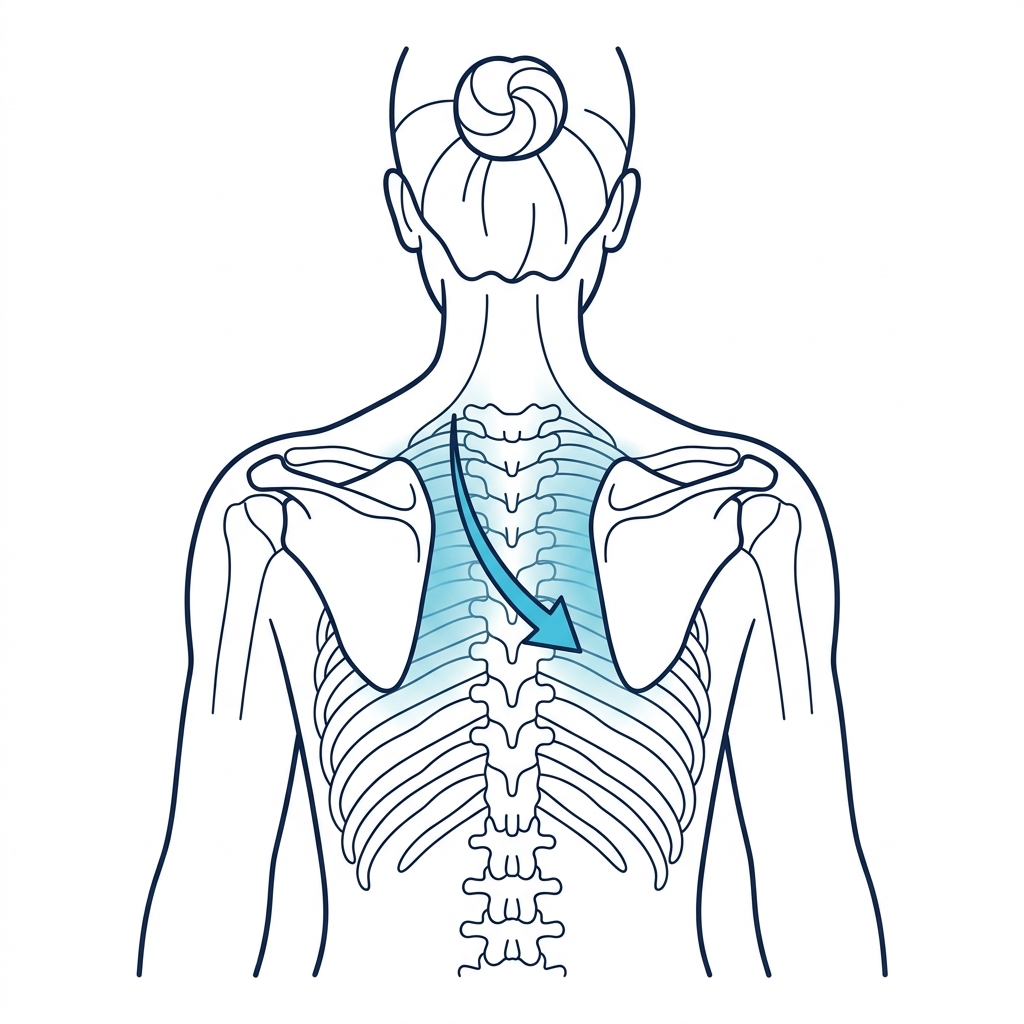
Scapular Setting and Posture Retraining
- Sit or stand tall and gently draw your shoulder blades down and back, without shrugging upward.
- Hold for 5 seconds, then relax, keeping your chest open and neck relaxed.
- Integrate this posture into your desk and mobile device habits throughout the day.
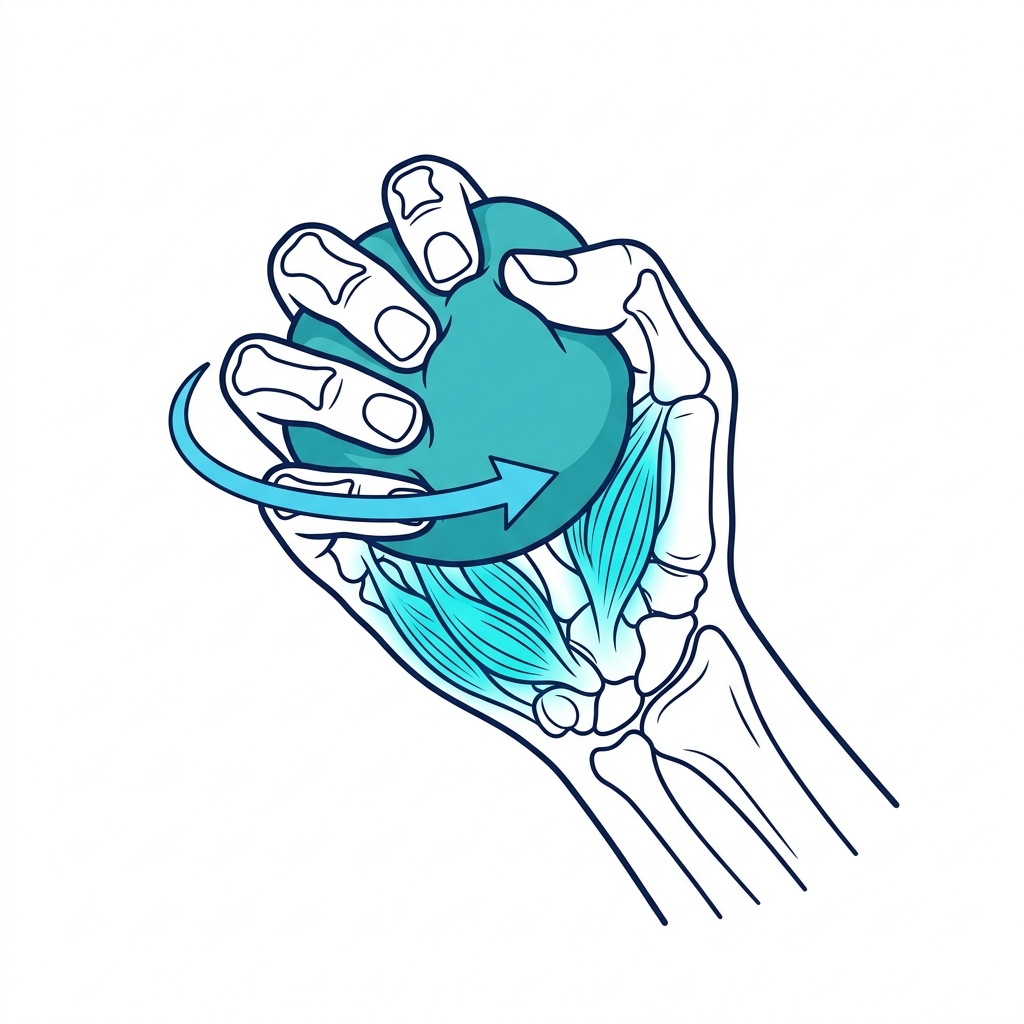
Grip and Intrinsic Hand Strengthening
- Gently squeeze a soft ball or therapy putty, hold for 3 seconds, then release. Keep the effort comfortable.
- Spread your fingers outward against a light rubber band, then bring them together slowly, to strengthen the interosseous muscles.
- Add these only once neural irritability has subsided, performing 10 light repetitions.

Gentle Cervical Spine Mobility
- Sitting tall with shoulders relaxed, slowly rotate your head to the left, then to the right.
- Gently tilt your ear towards each shoulder, staying strictly within a comfortable range.
- Move slowly and smoothly without forcing end-range motion.
3 Muscle Stretches (To Offload Surrounding Tissues)

Forearm Flexor Muscle Stretch
- Straighten the arm out in front of you, palm facing up, elbow gently straight.
- With the opposite hand, gently draw the wrist and fingers downward until you feel a muscle stretch in the forearm — never tingling in the fingers.
- Hold for 20–30 seconds, then release.

Doorway Pectoral Stretch
- Stand in a doorway with forearms resting against the doorframe, elbows at or below shoulder height.
- Step one foot gently forward until you feel an easy stretch across your chest.
- Hold for 30 seconds while breathing normally, then step back.
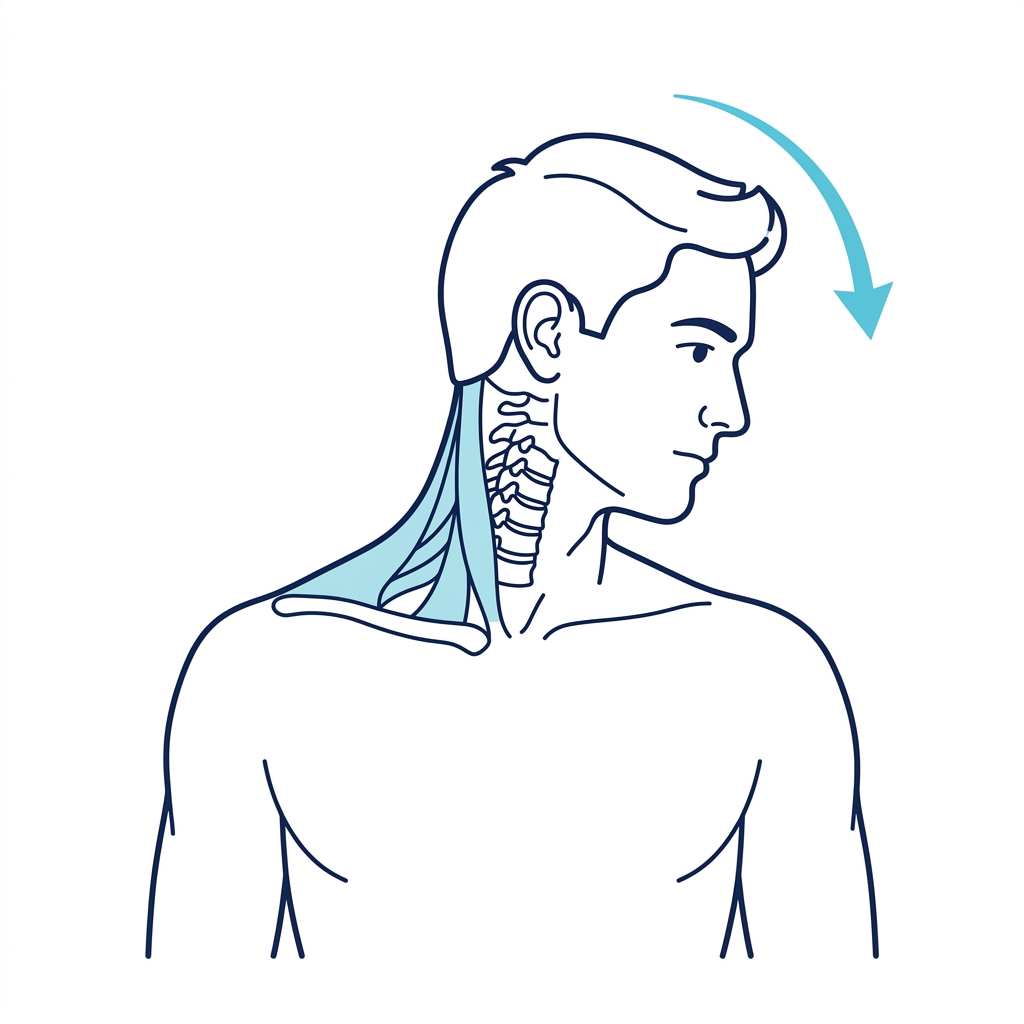
Neck and Upper-Trapezius Stretch
- Sitting tall, let the affected arm rest at your side or hold the edge of your chair.
- Gently tilt your head toward the opposite shoulder until an easy stretch is felt along the side of the neck.
- Hold for 20 seconds, return slowly, and repeat on the other side.
When to See an Orthopaedic Specialist
Cubital tunnel syndrome caught in its early stages responds well to nerve glides and nighttime protection — but this is a condition where timing is critical, because prolonged nerve compression can cause permanent axon loss and irreversible muscle atrophy. See an orthopaedic surgeon promptly if you notice weakening grip, difficulty opening jars or buttoning shirts, visible hollowing/wasting of the muscles between the thumb and index finger (first dorsal interosseous muscle), or if numbness has become constant rather than episodic. When indicated, electromyography (EMG) nerve conduction studies and minimally invasive in-situ ulnar nerve decompression or anterior transposition reliably halt nerve deterioration.
Dr. Christian Veillette MD, MSc, FRCSC is Division Head of Orthopaedic Surgery at University Health Network (UHN), Associate Professor in the Department of Surgery at the University of Toronto, and an orthopaedic surgeon at the Sprott Department of Surgery and Schroeder Arthritis Institute, Toronto Western Hospital.
Medical Disclaimer: This article is general educational information and not a substitute for individual medical advice. Speak with your doctor or physiotherapist before starting a new exercise program, particularly if you have hand weakness or muscle wasting.