
The Best Exercises to Recover Elbow Motion After a Fracture or Cast
An orthopaedic surgeon explains how to coax a stiff elbow back to motion — and why gentle, sustained “static progressive” stretching beats forcing the joint.
By Dr. Christian Veillette, as told for patients and families
Of all the joints in the body, the elbow is the least forgiving about being held still. After a fracture or a spell in a cast or sling, it can stiffen with remarkable speed — the capsule that wraps the joint thickens and contracts, and within just a couple of weeks of immobilisation the elbow can begin to lose motion that is genuinely hard to win back. Stiffness is the single most common complication after elbow trauma, and because elbow motion loss translates into an outsized loss of overall arm function, getting the joint moving safely matters enormously.
Yet this is exactly where instincts often work against recovery. After an injury, it feels natural to protect the arm and avoid moving it — and after weeks in a cast, the first attempts to bend and straighten feel tight and uncomfortable, which discourages further effort. A stiff elbow does not loosen on its own; it must be moved, deliberately and regularly, to recover. Most of the range you will regain is won in the early weeks and months.
Essential Prerequisite: Always confirm with your treating orthopaedic surgeon that your fracture is stable and cleared for motion before starting this routine. This guide complements your surgeon’s and physiotherapist’s timeline — it never overrides it.

The Key Principle: Gentle and Sustained Beats Forceful
A tight elbow capsule is like stiff putty or leather: it responds far better to a gentle, sustained pull held over time than to a hard, aggressive push.
Static Progressive Stretch (Preferred)
Take the joint to the comfortable edge of range, hold at low tension, and as soft tissues relax (“stress relaxation”), gently nudge a fraction further and hold again. Lengthens the capsule without flaring inflammation.
Dynamic Continuous Force (Caution)
Spring-loaded or elastic continuous-force stretching keeps fighting the tissue. For a reactive joint like the elbow, continuous resistance often provokes inflammatory swelling, muscle guarding, and rebound fibrosis.
Your Routine at a Glance
Frequent, low-load bouts. Gains accrue steadily over 6 to 12 months.
Active Motion
Several times daily (little & often)
Sustained Stretches
3 to 4 times daily (held 30s–2min)
Warmup Protocol
Warm shower or 10 min moist heat
Golden Rule
Sustained hold > hard push
Before You Start: Critical Trauma Precautions
- Verify fracture clearance: Confirm with your orthopaedic surgeon that bone healing is sufficient for active motion and stretching.
- Judge by the next day: If the elbow is hotter, more swollen, or more painful the following morning, you did too much — ease back to gentler holds.
- Never bounce: Ballistic stretching triggers reflexive muscle spasm and damages healing capsular fibers.
- Seek prompt review if: You develop numbness or tingling in the ring and little fingers, or if the elbow becomes rapidly warmer and stiffer (concerning for heterotopic ossification).
7 Exercises for Elbow Motion Recovery
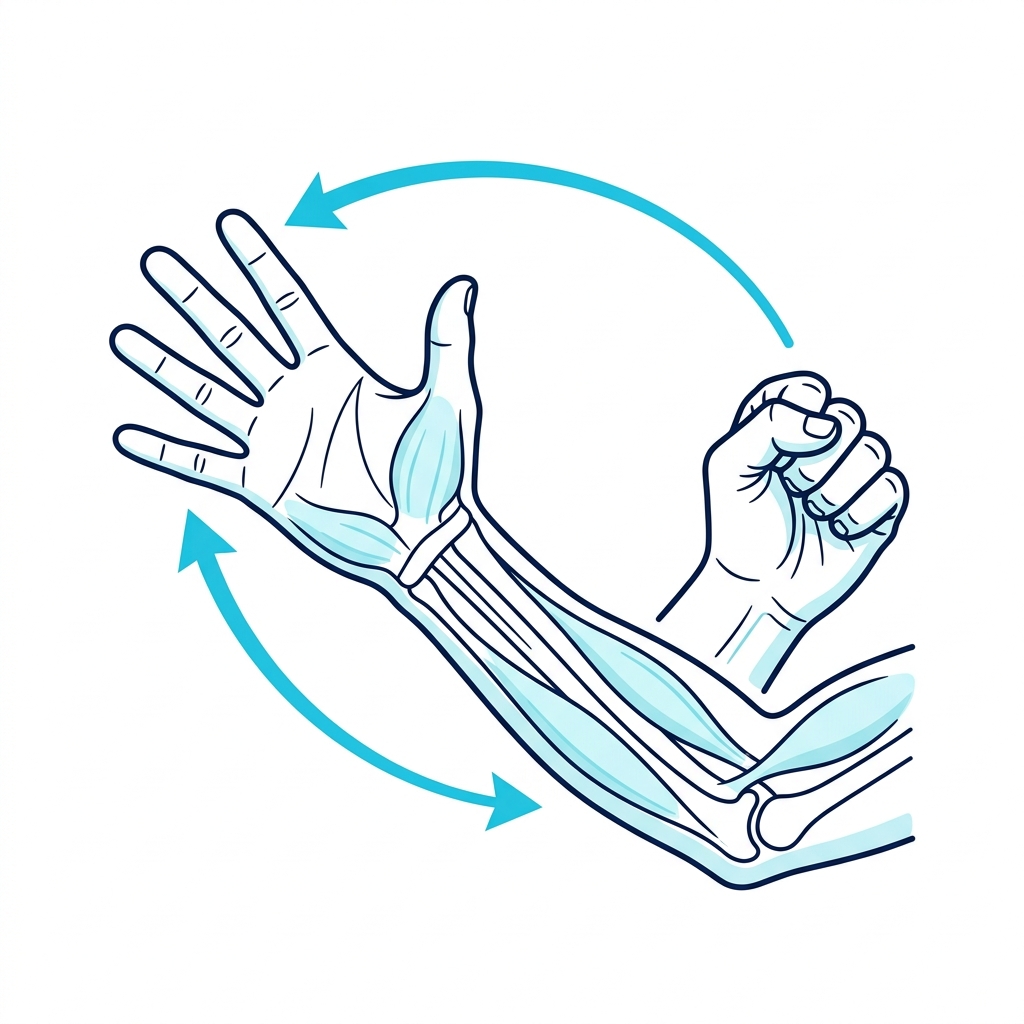
Hand and Finger Pumping Motion
- Open your hand wide, spreading all fingers apart, then make a gentle fist. Repeat slowly and smoothly 15 times.
- Touch the tip of each finger to your thumb in turn, then straighten fully.
- Do these frequently throughout the day to keep lymph and edema circulating.

Wrist Flexion and Extension
- With the forearm supported on a table or pillow, gently bend the wrist up and down through a comfortable range.
- Move slowly and smoothly, pausing briefly at each end.
- Keep it pain-free — this is about maintaining tendon excursion, not forceful stretching.
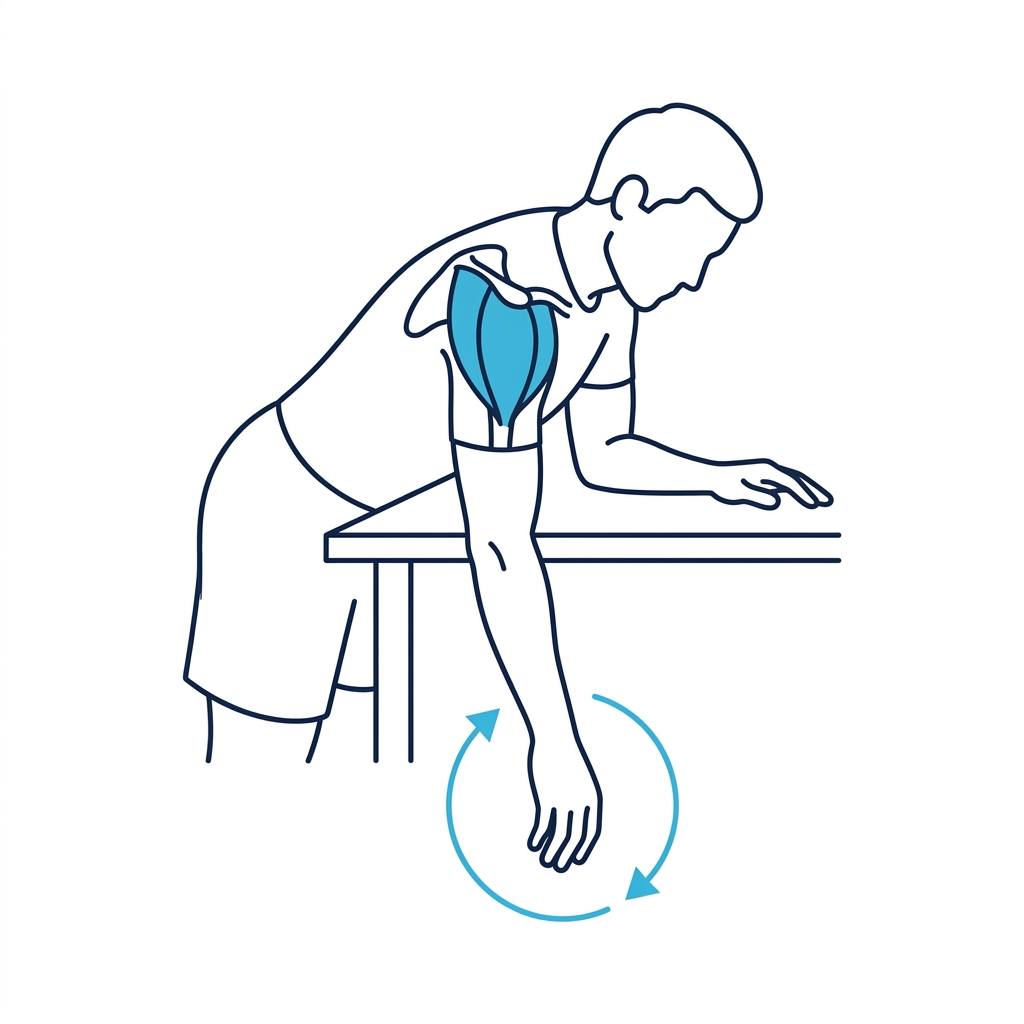
Gentle Shoulder Pendulums and Motion
- Lean forward, letting the affected arm hang relaxed, and let it sway gently in small circles using body motion.
- As able and cleared, perform gentle assisted forward raises with the good arm helping.
- Keep the movements comfortable and relaxed, keeping the elbow joint quiet.

Active Elbow Bending (Flexion)
- With your upper arm supported comfortably at your side, slowly bend the elbow to bring the hand toward your shoulder as far as comfortable.
- Hold for 3 seconds at your comfortable limit, then lower slowly and smoothly.
- Perform 10 controlled repetitions without jerky momentum.

Active Elbow Straightening (Extension)
- Rest your upper arm on a table with a folded towel under the distal humerus, forearm sliding out in front of you.
- Slowly straighten the elbow as far as it will comfortably go, pause, then relax back to a bend.
- Never force or slam the joint into the end of range — ease toward straight, never push through pain.

Forearm Rotation (Palm Up and Palm Down)
- Tuck the elbow into your side, bent to 90 degrees, forearm pointing straight forward.
- Slowly turn the palm up (supination) as far as comfortable, hold for 3 seconds, then rotate palm down (pronation) and hold.
- Keep the elbow glued to your side so motion occurs at the forearm, not by compensating with your shoulder.

Gentle Grip and Forearm Activation
- Hold a soft squeeze ball, rolled sock, or soft putty in your hand.
- Gently squeeze, hold for 3 to 5 seconds, then release fully.
- Keep the wrist in neutral alignment and maintain a comfortable, submaximal effort. Perform 10 light repetitions.
3 Static Progressive Stretches

Static Progressive Elbow Flexion Stretch
- Bend the elbow to a comfortable end-limit, bringing your hand towards your shoulder.
- With the opposite hand, apply a gentle, steady overpressure and hold at that low tension, letting the capsule slowly relax.
- As the tissue eases over 30 to 60 seconds, take up the small new range and hold again. Stop at gentle tension — never sharp pain.
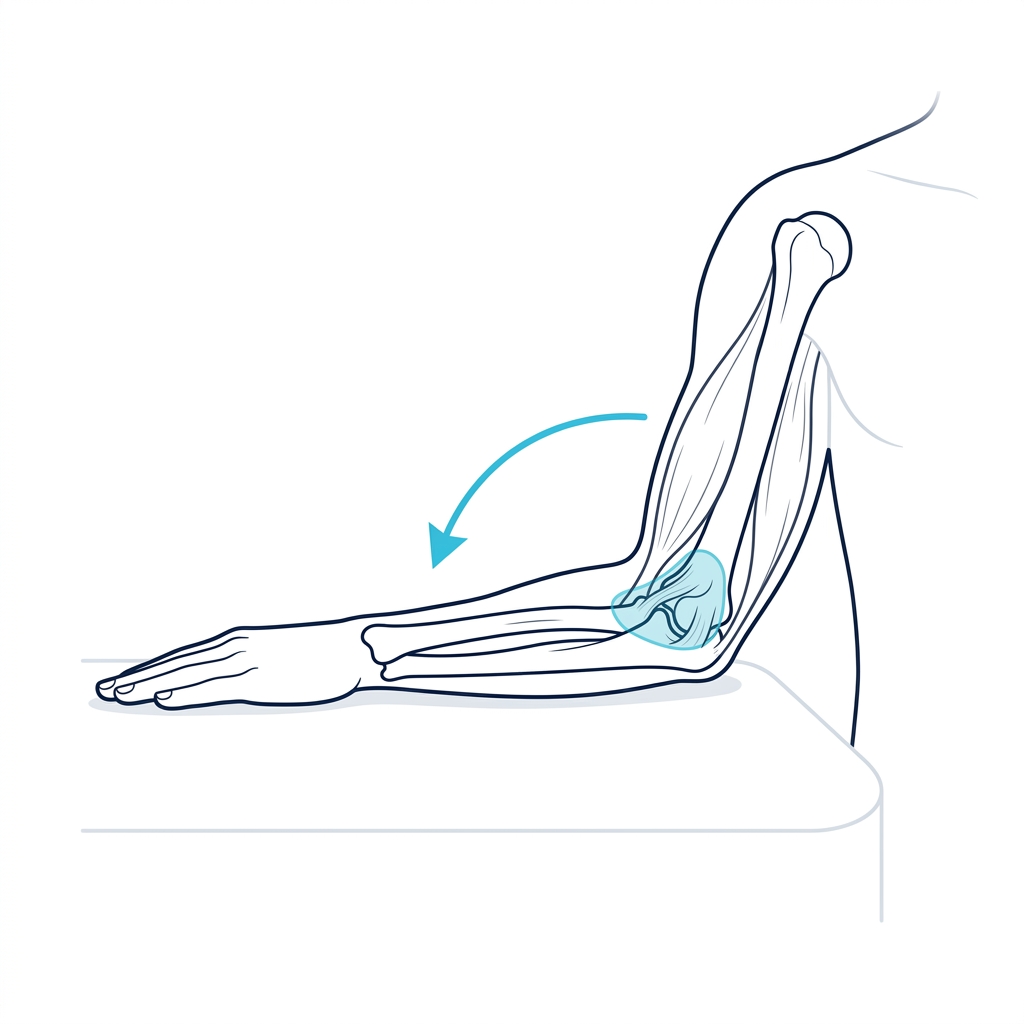
Static Progressive Elbow Extension Stretch
- Rest the back of your wrist or forearm on a table with the elbow straightening out in front of you.
- Apply gentle downward pressure with your other hand, or let gravity and a very light 1-lb wrist weight ease the elbow towards straight.
- Hold for 1 to 2 minutes at low, steady tension, letting the tissue relax and yield.

Static Progressive Forearm Rotation Stretch
- With the elbow tucked at your side and bent to 90 degrees, turn the palm up to a comfortable limit and hold.
- Use the other hand to apply a steady assist, letting the forearm relax, then gently take up the slight give.
- Repeat towards palm-down. Hold each direction for 30 seconds at low tension.
Looking for Clinical Protocol PDFs?
Download Dr. Veillette's Elbow Motion & Static Progressive Stretch Protocol designed for physiotherapists.
When to See an Orthopaedic Specialist
Some motion loss after elbow fracture is common, and most responds to patient static progressive stretching. However, you should be evaluated promptly if your motion plateaued early or is actively regressing; if the elbow becomes rapidly warmer, firmer, and increasingly swollen (which can indicate heterotopic ossification — abnormal bone formation in soft tissues); if you develop numbness or tingling in the ring and little fingers (ulnar neuropathy); or if you suspect hardware irritation or non-union. In resistant contractures, specialized static progressive turnbuckle splints or minimally invasive arthroscopic capsular release effectively restore functional motion.
Dr. Christian Veillette MD, MSc, FRCSC is Division Head of Orthopaedic Surgery at University Health Network (UHN), Associate Professor in the Department of Surgery at the University of Toronto, and an orthopaedic surgeon at the Sprott Department of Surgery and Schroeder Arthritis Institute, Toronto Western Hospital.
Medical Disclaimer: This article is general educational information and not a substitute for individual medical advice. After a fracture, always follow your surgeon’s and physiotherapist’s specific instructions before starting or progressing a new exercise program.