
The Best Exercises to Ease Arthritic Shoulders
An orthopaedic surgeon shares the movements and stretches shown to reduce pain, restore motion and help you delay — or avoid — an operation.
By Dr. Christian Veillette, as told for patients and families
As an orthopaedic surgeon, one of the most common things I hear in clinic is, “I’ve stopped using the arm because I don’t want to wear the joint out.” I understand where that comes from — for decades we described osteoarthritis as “wear and tear,” and that phrase does real harm. It tells patients their shoulder has failed because they used it too much, so the sensible thing must be to use it less. The opposite is true.
We now know that osteoarthritis is not simply a joint wearing out from use. Genetics, previous injury, and the biology of the cartilage itself all play a part, and a resting joint does not heal — it stiffens, the surrounding muscles weaken, and the pain slowly gets worse. Movement, on the other hand, is one of the few things shown to genuinely help. Guided exercise is now a first-line, evidence-based treatment for shoulder osteoarthritis, recommended in orthopaedic and physical therapy practice guidelines before we ever discuss surgery.
The reasons are straightforward. Gentle movement helps circulate the synovial fluid that nourishes articular cartilage; strengthening the rotator cuff and the muscles around the shoulder blade improves the stability of a joint that has lost some of its smooth surface; and staying active keeps the whole shoulder supple and less painful in day-to-day life. Studies of exercise therapy for shoulder arthritis consistently report meaningful reductions in pain — often in the range of 30 to 50 per cent — in people who stay with a program for six weeks or more.
The shoulder is different from the hip or knee in one important way: it is the most mobile joint in the body, and it relies on muscle rather than bony architecture for its stability. That is why the routine below is built around the rotator cuff and the shoulder blade, and why the golden rule is endurance and control, not heavy load.

Clinical Insight: Radiographic severity on X-rays does not dictate pain or functional disability. Many patients with advanced joint space narrowing manage comfortably for years through targeted rotator cuff endurance, joint lubrication movements, and peri-scapular strengthening.
Your Routine at a Glance
Gentle joint fluid circulation and rotator cuff endurance to take pressure off worn cartilage.
Strengthening Frequency
3 days / week (non-consecutive)
Mobility & Stretches
Daily (even multiple short bouts)
Target Volume
3 sets of 10 reps (light weight)
Timeline to Result
4 to 6 weeks for meaningful relief
Before You Start: Essential Arthritis Rules
- Work within a comfortable range: Mild discomfort during exercise is fine; sharp or escalating pain means stop immediately.
- Warm up first: A warm shower or 10 minutes of moist heat loosens the joint capsule. Ice for 15 minutes afterwards if sore.
- Avoid heavy overhead loading: Keep the arm below shoulder height early on, and avoid heavy overhead lifting while the joint is irritable.
- If hot or acutely swollen: Rest the joint on days with acute flares. If pain worsens relentlessly over weeks, arrange for specialist reassessment.
7 Exercises for Arthritic Shoulders

Pendulum Swings
- Stand and lean forward, resting your good hand on a table or chair for support.
- Let the sore arm hang straight down, completely relaxed and heavy.
- Using small movements of your body — not your shoulder muscles — let the arm swing in small circles, then forward and back, then side to side.
- Aim for about 10 repetitions in each direction.

Assisted Overhead Reach with a Stick
- Lie on your back holding a cane, broom handle or dowel in both hands, palms up, hands shoulder-width apart.
- Using the good arm to push and guide, slowly raise the stick up and overhead until you feel a gentle stretch.
- Hold briefly, then lower under control. Repeat smoothly 10 times.
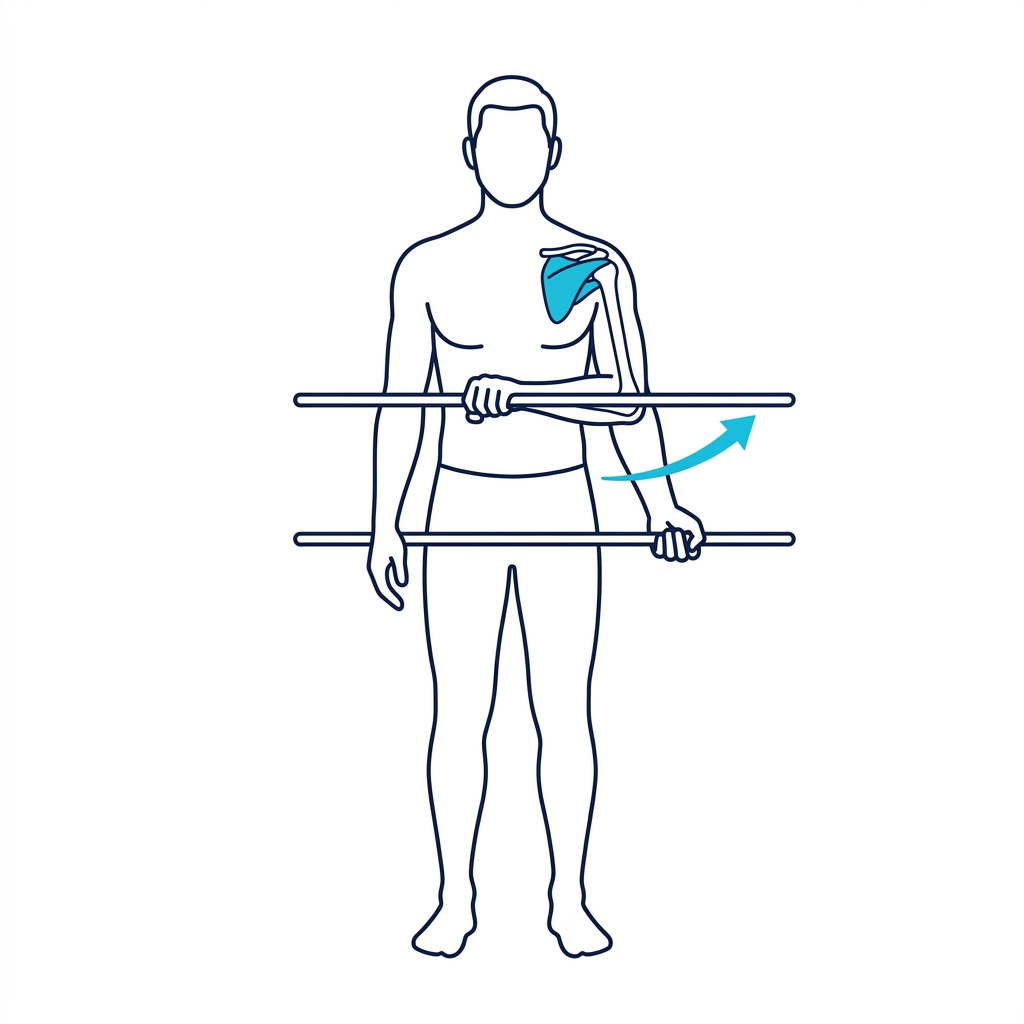
Assisted External Rotation with a Stick
- Lie on your back (or stand) holding the stick in both hands, elbows tucked at your sides and bent to 90 degrees.
- Keeping the sore elbow pinned to your side, use the good hand to push the stick so the sore forearm rotates outward, away from your body.
- Hold the gentle stretch for 5 seconds, then return. Keep the elbow glued to your side throughout.
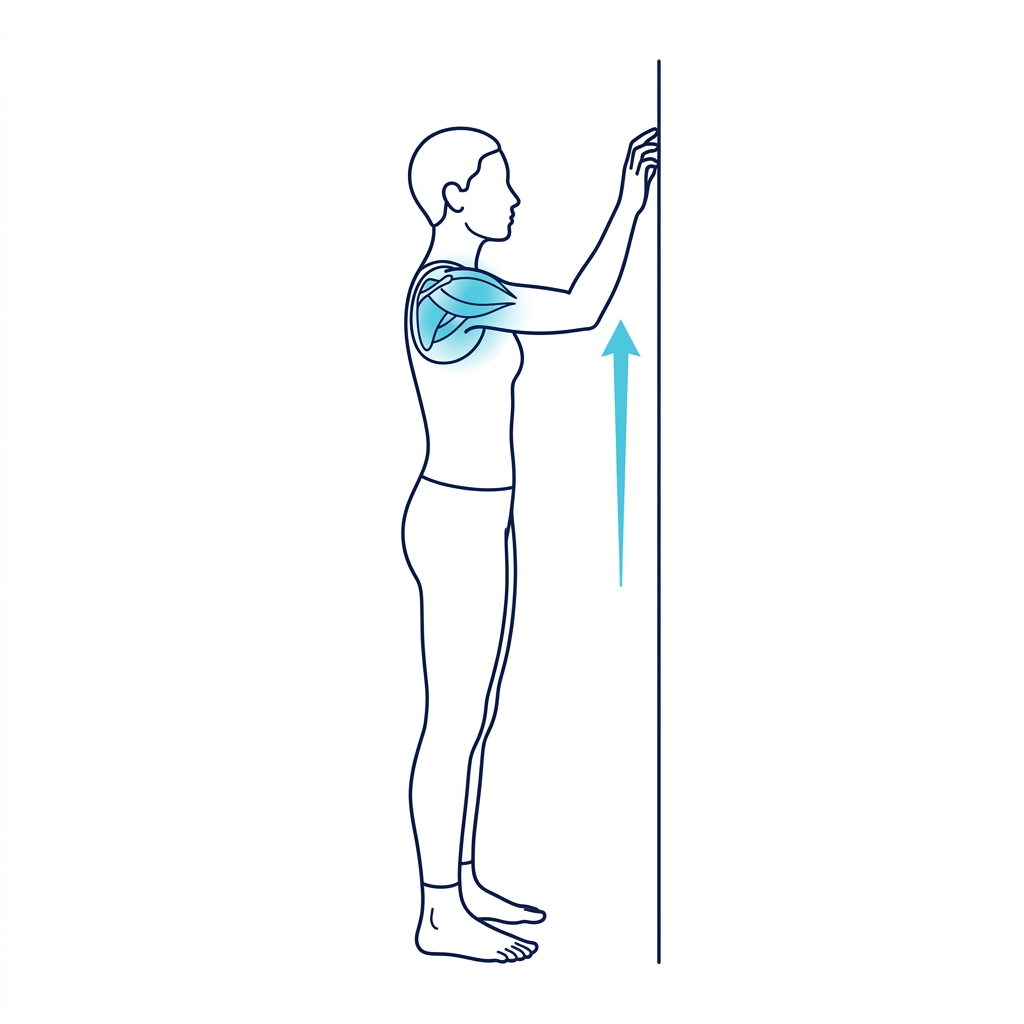
Wall Walk (Finger Ladder)
- Stand facing a wall, an arm's length away, fingertips of the sore arm on the wall at about waist height.
- Slowly walk your fingers up the wall, letting them do the lifting, until you feel a gentle, comfortable stretch.
- Hold briefly, then walk the fingers back down under control.

Isometric Rotator Cuff Holds
- Stand next to a wall or door frame with your elbow bent to 90 degrees and tucked at your side.
- For external rotation, press the back of your wrist gently outward into the wall; hold for 5 seconds. For internal rotation, press the palm into the wall for 5 seconds.
- Push only to about half effort (50%). There should be muscular effort but no sharp joint pain, and zero movement.

Resistance-Band External Rotation
- Anchor a light resistance band at waist height. Stand side-on, holding it in the sore hand, elbow bent and tucked at your side.
- Keeping the elbow pinned to your side, rotate the forearm outward away from your body, then return slowly.
- Control the movement in both directions — the slow return phase matters just as much as the pull.
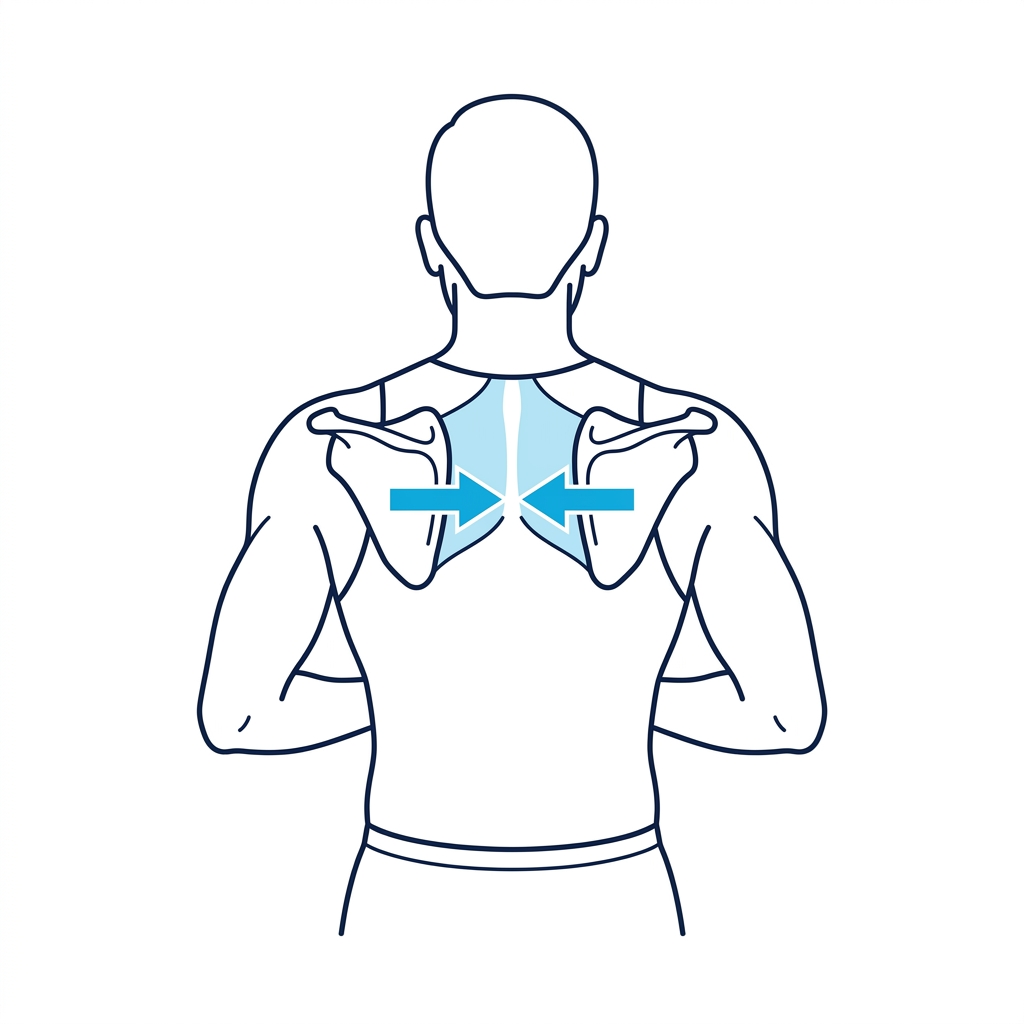
Scapular Squeezes (Shoulder-Blade Rows)
- Sit or stand tall, arms relaxed at your sides or holding a light resistance band in front of you.
- Draw your shoulder blades down and back, as if gently squeezing a pencil between them. If using a band, pull your elbows back as you squeeze.
- Hold for 5 seconds, then relax slowly. Keep the shoulders down, not shrugged up towards the ears.
3 Targeted Stretches
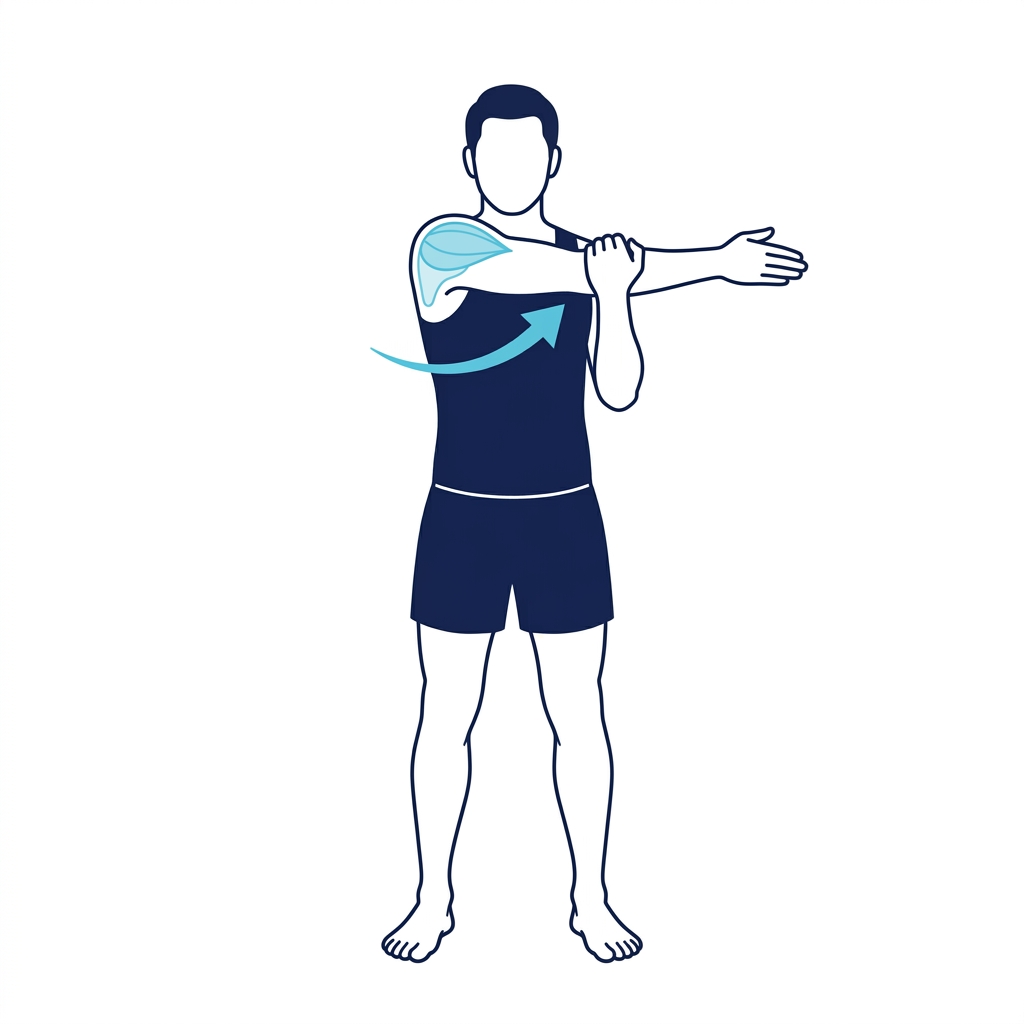
Cross-Body Posterior Stretch
- Bring the sore arm across the front of your body at chest height.
- Use the opposite hand to support under the elbow and gently draw the arm closer until you feel an easy stretch at the back of the shoulder.
- Hold for 20–30 seconds while keeping the shoulder relaxed and down, then release.

Doorway Chest Stretch
- Stand in an open doorway and rest your forearms on the frame, elbows at or below shoulder height.
- Step one foot gently through the doorway until you feel an easy stretch across the chest and the front of the shoulders.
- Hold for 20–30 seconds while breathing normally, then step back.

Neck and Upper-Trapezius Stretch
- Sitting tall, let the sore arm rest at your side or hold the edge of your chair to anchor the shoulder down.
- Gently tilt your head towards the opposite side, bringing your ear towards that shoulder, until you feel an easy stretch along the side of the neck.
- Hold for 20 seconds, then return slowly and repeat on the other side.
Considering Shoulder Arthroplasty?
When advanced bone-on-bone arthritis no longer responds to conservative exercises, anatomic or reverse shoulder replacement restores pain-free function.
When to See an Orthopaedic Specialist
Exercise is powerful, but it is not the complete answer for everyone. See your physician or request a referral to Dr. Veillette if shoulder pain wakes you regularly at night, if you are losing motion despite diligent stretching, or if simple activities of daily living (dressing, reaching, hygiene) have become severely limited. In these situations, an orthopaedic assessment — including specialized 3D CT imaging, targeted injections, or a discussion of modern anatomic or reverse shoulder arthroplasty — provides clarity and a definitive path to recovery.
Dr. Christian Veillette MD, MSc, FRCSC is Division Head of Orthopaedic Surgery at University Health Network (UHN), Associate Professor in the Department of Surgery at the University of Toronto, and an orthopaedic surgeon at the Sprott Department of Surgery and Schroeder Arthritis Institute, Toronto Western Hospital.
Medical Disclaimer: This article is general educational information and not a substitute for individual medical advice. Speak with your doctor or physiotherapist before starting a new exercise program.